Overview

Tomato is an annual plant from the nightshade family (Solanaceae) and is considered one of the most important crops in the global vegetable industry.

It is characterised by a rapid growth rate, the ability to adapt to both greenhouses and open fields, and a self-pollination mechanism in most cultivars – a significant advantage for achieving a uniform yield.

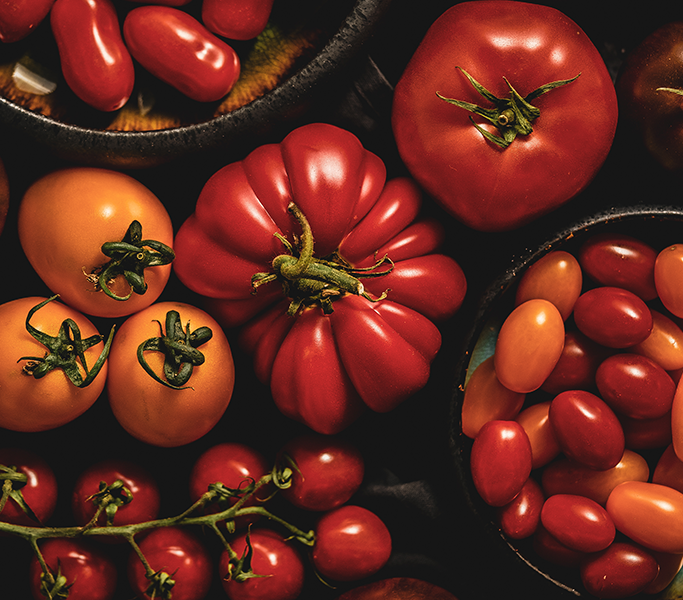
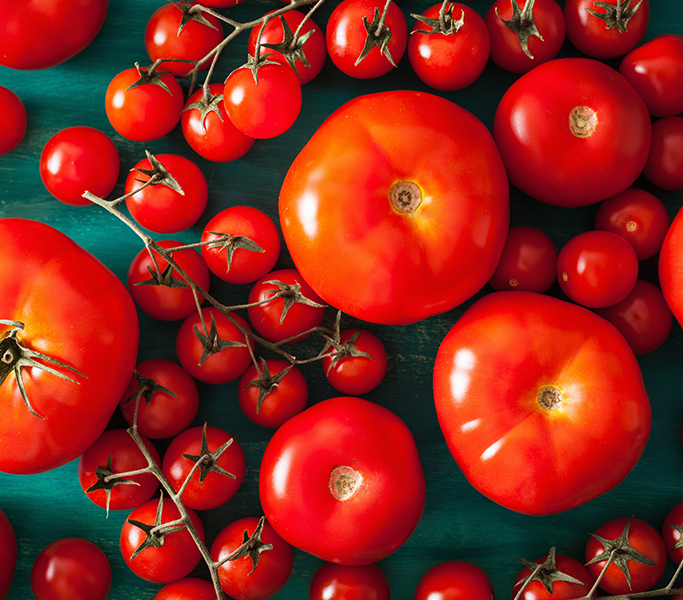
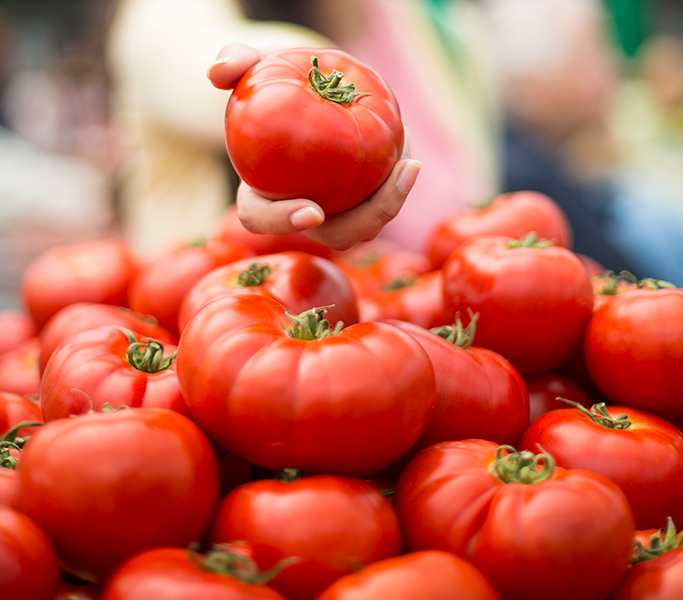
The fruit is a fleshy, multi-seeded berry that appears in a wide range of shapes and sizes: cherry tomatoes, cluster (truss) tomatoes, medium-sized tomatoes, and large, meaty varieties. This diversity of cultivars enables adaptation to both fresh markets and processing industries, including the production of tomato paste, purees, ketchup, and canned products.

Nutritionally, tomatoes are considered among the healthiest foods: they are rich in lycopene – a powerful antioxidant associated with reduced risk of heart disease and cancer – as well as vitamin C, potassium, and folic acid.

Thanks to cultivar development, precise irrigation management, and advanced greenhouse cultivation, tomatoes have become a leading global crop adapted to a wide range of climates.

Soil

Light to medium soils, well drained; sensitive to excessive salinity

Irrigation

Precise drip irrigation, maintaining low moisture fluctuation

Temperature

Optimal range: 18-28°C. Highly sensitive to frost/cold and extreme heat

Light

Full sun; essential for photosynthesis and lycopene accumulation

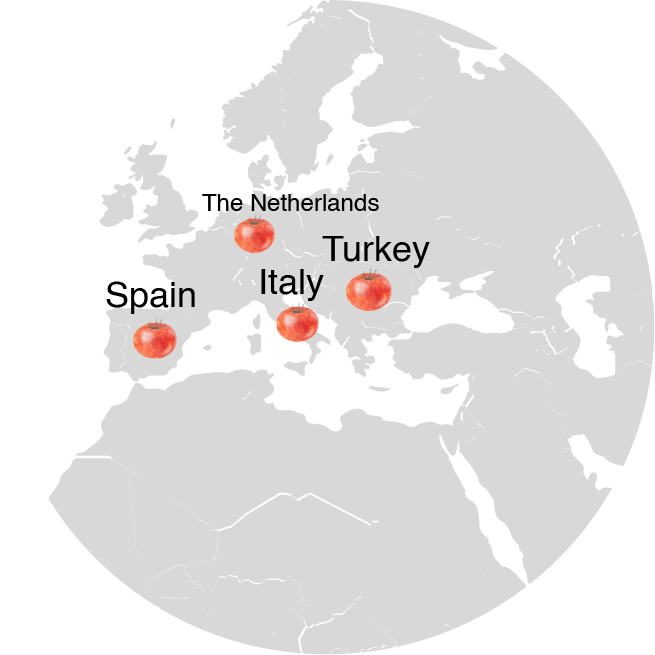
Global Production

More Agricultural Crops

Powered by JUNAMI © 2026 All rights reserved.

This website uses cookies to ensure proper functionality and improve your experience. Learn more in our Privacy Policy.